

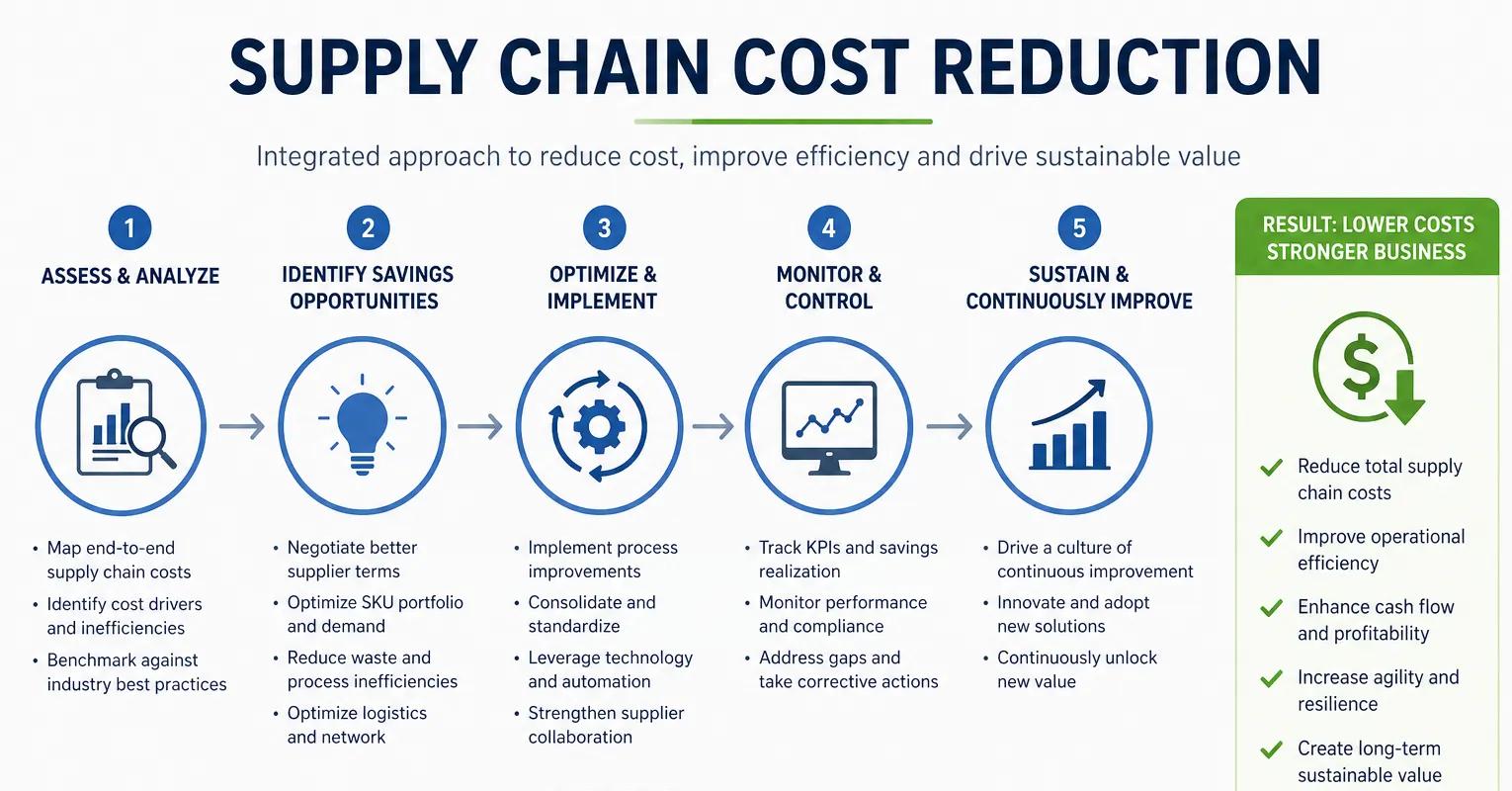
In today's interconnected economy, businesses operating across international borders face mounting pressure to control costs without sacrificing service quality. Supply chain cost reduction has become a strategic priority for logistics managers, CFOs, and operations leaders alike. With fuel prices fluctuating, carrier capacity tightening, and regulatory landscapes shifting, finding sustainable ways to cut costs is no longer optional; it's a competitive necessity.
Why Global Supply Chains Are Under Cost Pressure
Global supply chains are inherently complex. Multiple carriers, customs requirements, currency fluctuations, and varied compliance standards all contribute to cost inefficiencies. Many companies are overpaying simply because they lack visibility into where their money is actually going. The first step toward meaningful supply chain cost reduction is understanding your cost structure in granular detail.
Without accurate data, businesses cannot identify waste, negotiate effectively, or benchmark performance against industry standards. This is where smart strategy begins.
How to Reduce Freight Costs Through Smarter Procurement
One of the most impactful ways to address how to reduce freight costs is through strategic carrier procurement. Rather than relying on a single carrier or accepting default rates, businesses should regularly conduct competitive bidding processes across multiple carriers and modes of transport.
Consolidating shipments, optimizing load planning, and shifting freight to more cost-effective modes such as ocean or rail where timelines allow can generate significant savings. Building long-term relationships with preferred carriers also creates leverage for negotiating better rates while securing capacity during peak seasons.
Additionally, reassessing your incoterms and trade lanes periodically ensures you are not locked into agreements that no longer reflect current market conditions.
Leverage Freight Audit and Payment Best Practices
One of the most overlooked opportunities in logistics cost management lies in freight audit and payment best practices. Carrier invoices are riddled with errors more often than most companies realize. Duplicate charges, incorrect fuel surcharges, misbilled accessorials, and rate discrepancies can silently drain your budget month after month.
Implementing a rigorous freight audit process, either in-house or through a third-party provider, ensures every invoice is validated against contracted rates before payment is made. This process alone can recover a substantial portion of overpaid freight costs. The key is consistency and accuracy across all carrier relationships, modes, and geographies.
Freight audit and payment best practices also include setting clear dispute resolution workflows, maintaining updated carrier contracts in a centralized system, and tracking invoice cycle times to improve cash flow management.
Unlock Freight Audit Savings With Data Intelligence
Beyond catching billing errors, a well-structured freight audit program delivers powerful freight audit savings through business intelligence. When invoice data is aggregated and analyzed, patterns emerge that reveal deeper inefficiencies lanes with consistently poor carrier performance, routes that are systematically overpriced, or accessorial charges that signal operational problems at origin or destination points.
This data becomes a foundation for strategic decision-making. Companies that invest in freight audit technology and analytics can reallocate budget toward higher-value activities, reduce their cost per shipment, and improve overall supply chain performance metrics.
Optimize Inventory and Demand Planning
Freight costs are often a symptom of deeper inventory and planning issues. Poor demand forecasting leads to expedited shipments, rush orders, and premium carrier charges. Aligning your inventory strategy with realistic demand signals reduces the need for emergency freight and allows for more economical routing and scheduling.
Implementing collaborative planning with key suppliers and customers creates greater predictability across the supply chain, which directly translates into lower transportation spend and reduced carrying costs.
Build a Culture of Continuous Cost Improvement
Supply chain cost reduction is not a one-time initiative. It requires a culture of continuous improvement, where cross-functional teams regularly review spend data, challenge existing processes, and adopt new technologies. Visibility platforms, transportation management systems, and AI-driven analytics tools are making it easier than ever to identify savings opportunities in real time.
Partner With the Right Experts
If you are serious about driving meaningful supply chain cost reduction in your global operations, partnering with an experienced logistics intelligence provider makes all the difference. nVision Global specializes in freight audit and payment solutions, data analytics, and cost management strategies designed for complex international supply chains. With decades of expertise and a commitment to transparency, nVision Global helps businesses take control of their freight spend and unlock measurable savings.
Ready to reduce your freight costs and optimize your supply chain? Contact nVision Global today and start your journey toward smarter, leaner global logistics.